How Much Should You Spend on Wedding Party Gifts?
Build a wedding-party gift budget around your means, your attendants’ existing costs, and personal fit. Comparable care matters more than identical purchases.

6 min read
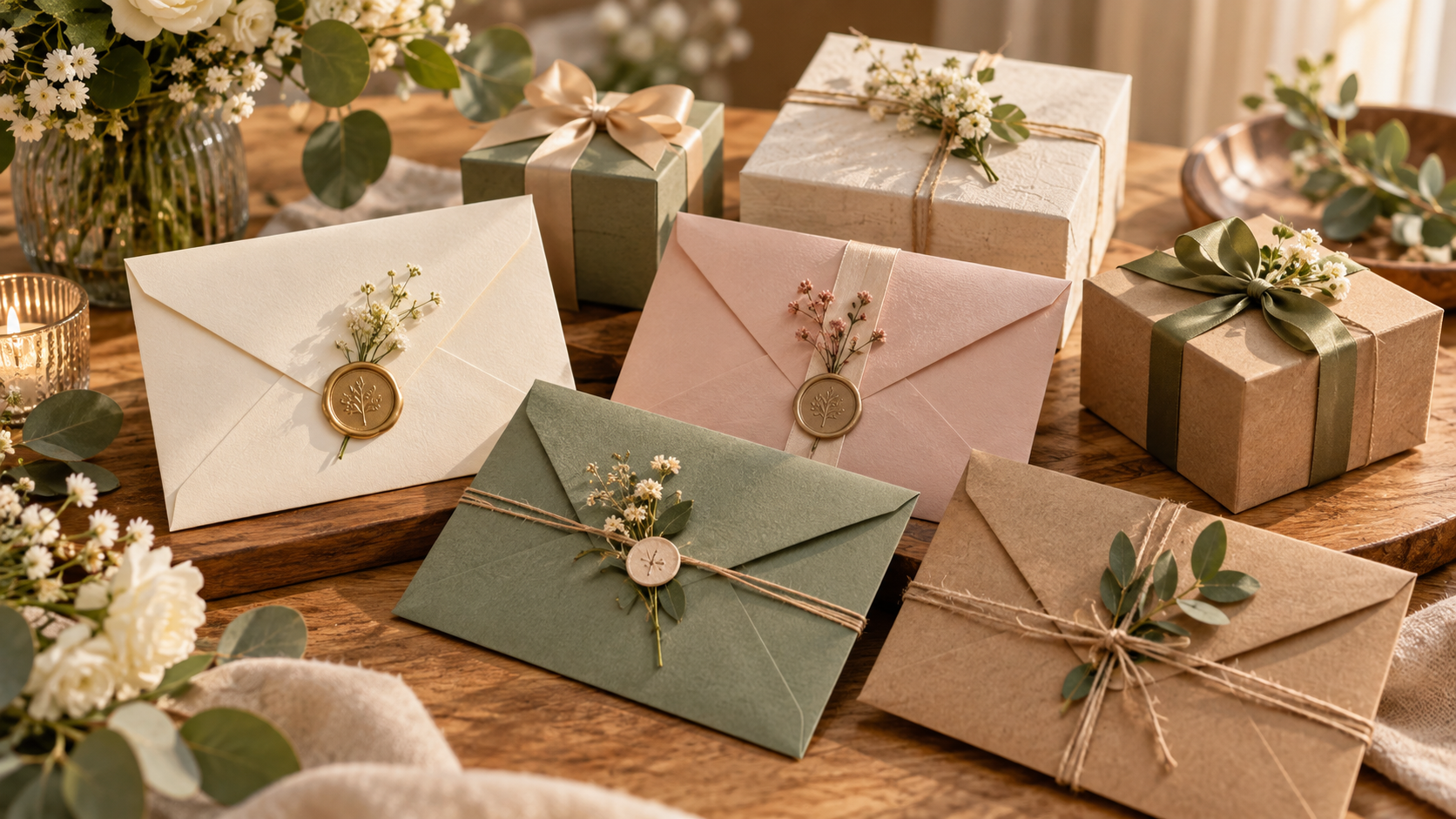
There is no universal answer to how much to spend on wedding party gifts. A fair thank-you is one you can give with warmth, repeat across the people who supported the wedding, and fit inside the budget you actually have. The right number depends on what your attendants have already paid, how you want to thank them, and whether the gift is useful to the person receiving it. Treat the question as planning math, rather than a test of generosity or a price set by social media.
Separate the Two Gifts
The gift you give a bridesmaid or groomsman is a thank-you from the couple. It is separate from any wedding gift that attendant may choose to give you. Combining those decisions creates pressure on both sides: the attendant may feel expected to “earn” your gift, while you may judge your own thank-you by the value of a present you receive.
Emily Post’s guidance on gifts for bridesmaids and groomsmen centers on a personal, lasting expression of appreciation rather than a required price. Read that advice in context with its overview of traditional wedding expenses: attendants can already be carrying meaningful costs. Your gift acknowledges their time and care; it does not reimburse every expense or settle an account.
For guests, deciding what to bring to an engagement party or how to give cash as a wedding gift involves separate choices. Neither determines what the couple should spend thanking attendants.
Count the Costs Your Wedding Party Already Carries
Before choosing an amount, write down the costs you know about and the costs you have asked people to consider. Attire, alterations, travel, lodging, showers, bachelor or bachelorette events, and time away from work can all shape what feels comfortable. People may also have different routes, responsibilities, or family circumstances. Do not assume that a shared event had the same impact on everyone.
Use this quick review:
- What clothing, accessories, or professional services did the wedding require?
- Who is traveling, booking a room, or taking time off?
- Which pre-wedding events were optional, and which did you strongly encourage?
- Have you already paid for any attendant expenses, and did everyone receive the same support?
This is not a reason to skip appreciation. It is a reason to choose a gift that does not make the people closest to the wedding feel as though another bill has arrived.
Build a Per-Person Budget
Wondering how much to spend on bridesmaid gifts or how much to spend on groomsmen gifts? Start with one total you can afford for everyone. Subtract a contingency for shipping and presentation, then divide what remains by the number of attendants.
Per-person ceiling = (total budget − contingency) ÷ number of attendants. This is planning math, not an etiquette law. Copy the worksheet onto paper; its blank spaces are for your own figures.
Wedding-party gift budget worksheet
| Planning item | Your amount | What it helps you decide |
|---|---|---|
| Total wedding-party gift budget | Your amount: ____ | The amount you can spend without strain |
| Number of bridesmaids and groomsmen | Your count: ____ | How many gifts you need |
| Per-person ceiling | Your amount: ____ | A practical upper limit before personalization |
| Contingency for delivery or presentation | Your amount: ____ | Room for shipping, cards, or a change in plans |
If the arithmetic produces an amount that feels too high, lower the total. If it produces a number that does not suit the people receiving it, keep the ceiling and change the format. A thoughtful note and a modest useful item can communicate more than an expensive object chosen under deadline pressure.
The Knot’s contemporary etiquette discussion can be useful as a picture of current wedding retail culture, but any publication benchmark is a reference point for its readers at a particular time. It is not a national requirement, and it should never override your budget or the costs your attendants already carry.
Equal Does Not Always Mean Identical
Fairness usually means comparable care, timing, and thought. It does not require every person to receive the same object. A gift that works for one attendant may be impractical for another because of interests, accessibility, travel plans, or daily use. Keep the overall effort and value reasonably balanced while allowing the expression to be personal.
Match the gift to the attendant’s circumstances
| Role or situation | Existing cost to consider | Gift constraint | Flexible alternative |
|---|---|---|---|
| Attendant traveling from out of town | Transport and lodging | Avoid a bulky item | A compact useful item or delivered experience |
| Attendant with a required outfit | Attire and alterations | Do not add another wearable obligation | A personal note and a practical item |
| Attendant who avoids clutter | Storage and household preferences | Skip decorative objects | Consumable, shared, or experience-based thank-you |
| Attendant with accessibility needs | Event logistics and energy | Check usability privately | Adapt the format and presentation |
Before giving, check for:
- Comparable care across the group.
- The same presentation window.
- A personal note for each person.
- No public price comparisons.
Add a personal line to each card. Do not announce prices or compare gifts in front of the group. A small difference that reflects genuine fit is kinder than identical items that no one can use.
Proposal Gifts, Wedding-Day Gifts, or One Thank-You?
Decide whether a proposal gift, a wedding-day gift, or one combined thank-you best matches your plans. A proposal box may be a way to ask someone to participate; it does not have to become a second required gift. If you give a small proposal token, you can still make the wedding-day thank-you the main expression of gratitude.
Write your decision into the planning notes before shopping. That simple step prevents duplicate spending and keeps the gesture from becoming a sequence of implied obligations. If the wedding changes, revisit the plan with the same question: what will feel sincere and manageable now?
If your budget is tight
Choose a smaller useful item that fits the person’s life, plan one shared experience that everyone can enjoy, or pair a modest gift with a personal letter. You can also give the letters on the wedding day and follow with a simple thank-you later. The effort to say what their support meant is part of the gift.
Make the Thank-You Feel Personal
Specificity adds meaning without adding cost. Mention the quality you appreciate, the task they handled, or the way they made a difficult moment easier. Avoid describing the item’s price or explaining why you could not spend more. The recipient needs recognition, not your budget report.
Try this structure:
- Name the person and thank them directly.
- Mention one concrete part of their support.
- Say what you hope they enjoy or what you value about the relationship.
Original FaveSift note example: “Thank you for standing beside us and for keeping the planning grounded when it became hectic. We are grateful for your time, your humor, and the care you brought to this day.” That language can accompany many kinds of gifts because it honors the relationship rather than the object.
FAQ: Wedding Party Gift Budgets
Does the maid of honor need a more expensive gift?
No. The role may involve additional time, but a higher price is not automatically the fairest response. Consider whether you have asked for extra work, then acknowledge it personally or offer practical support. Keep the overall approach respectful across the group.
Can the gift be an experience?
Yes, if the experience is easy to schedule and genuinely suits the recipient. Give enough information for them to use it, and avoid making attendance at another event a condition of appreciation.
What if the budget is tight?
Set a clear ceiling, reduce the number of extras, and write a sincere note. A useful small gesture, shared experience, or thoughtful letter can carry the message without creating financial strain.
Should everyone receive the same value?
Aim for comparable care and transparency in your own planning. Exact prices do not need to be public, and personalized choices can reasonably differ.
The best wedding-party gift is one that says “I noticed what you gave,” without asking anyone to measure the friendship in dollars.
Original FaveSift editorial copy
Choose the format you can give fairly, add a true personal detail, and let your attendants receive the thank-you without another obligation.
Sources and Updates
Sources were reviewed on September 11, 2026. Etiquette guidance reflects context and customs rather than fixed rules.
- emilypost.com - Gifts For Bridesmaids And Groomsmen
- emilypost.com - Wedding Expenses The Traditional Division
- theknot.com - Bridesmaid Gift Shopping Tips
- September 11, 2026Initial editorial publication.
About the author
Maya Carter
Maya covers everyday tech and thoughtful gift ideas for FaveSift. Before joining the editorial team, she helped independent retailers turn dense product details into useful, human buying guides. Her work focuses on the features that change an ordinary commute, workday, or weekend listen.