Open-Ear vs. Noise-Canceling Headphones: Which Is the Better Gift?
Choose open-ear or noise-canceling headphones by listening environment, awareness needs, comfort, travel, exercise, battery, calls, and fit risk.

6 min read
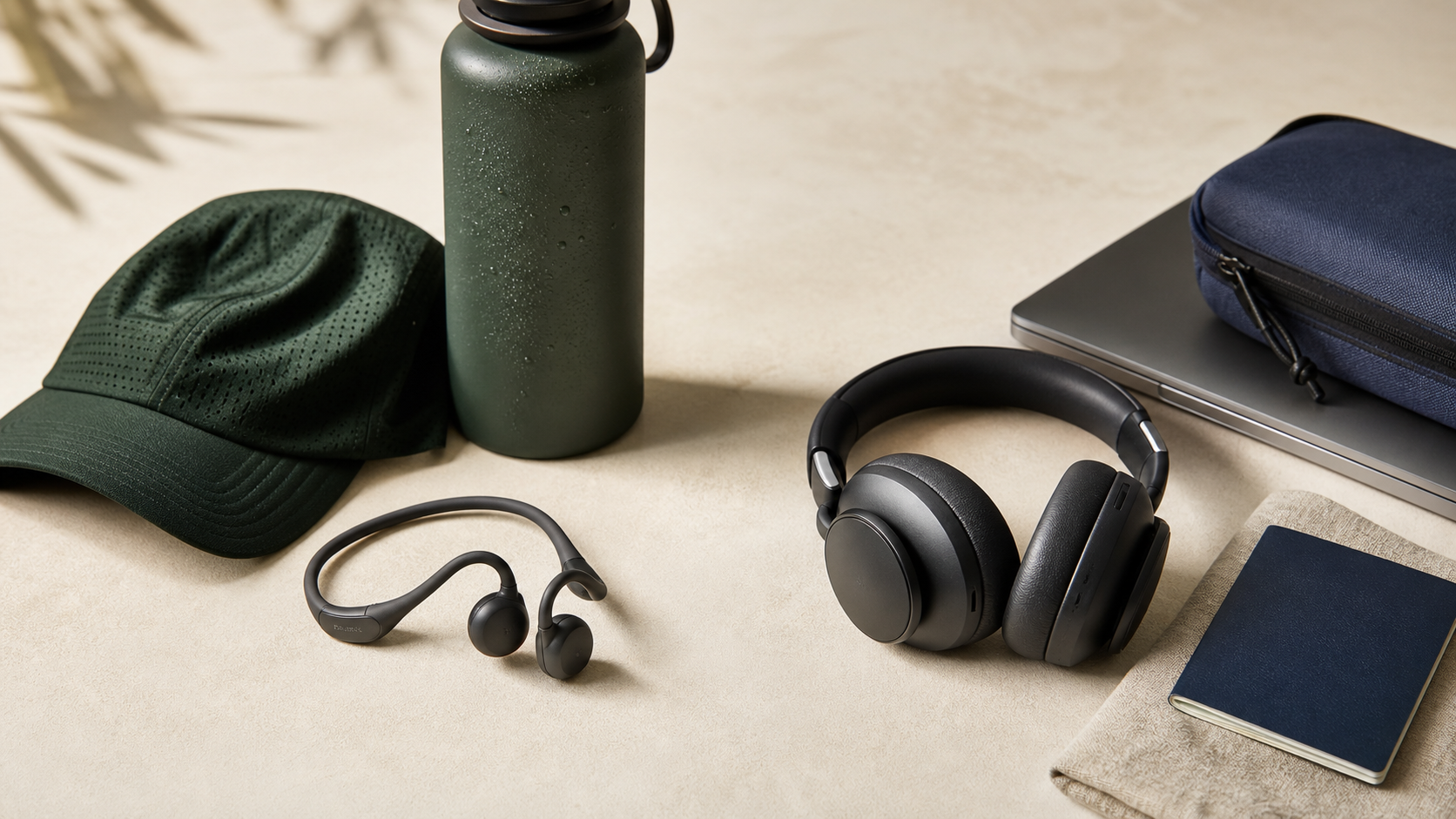
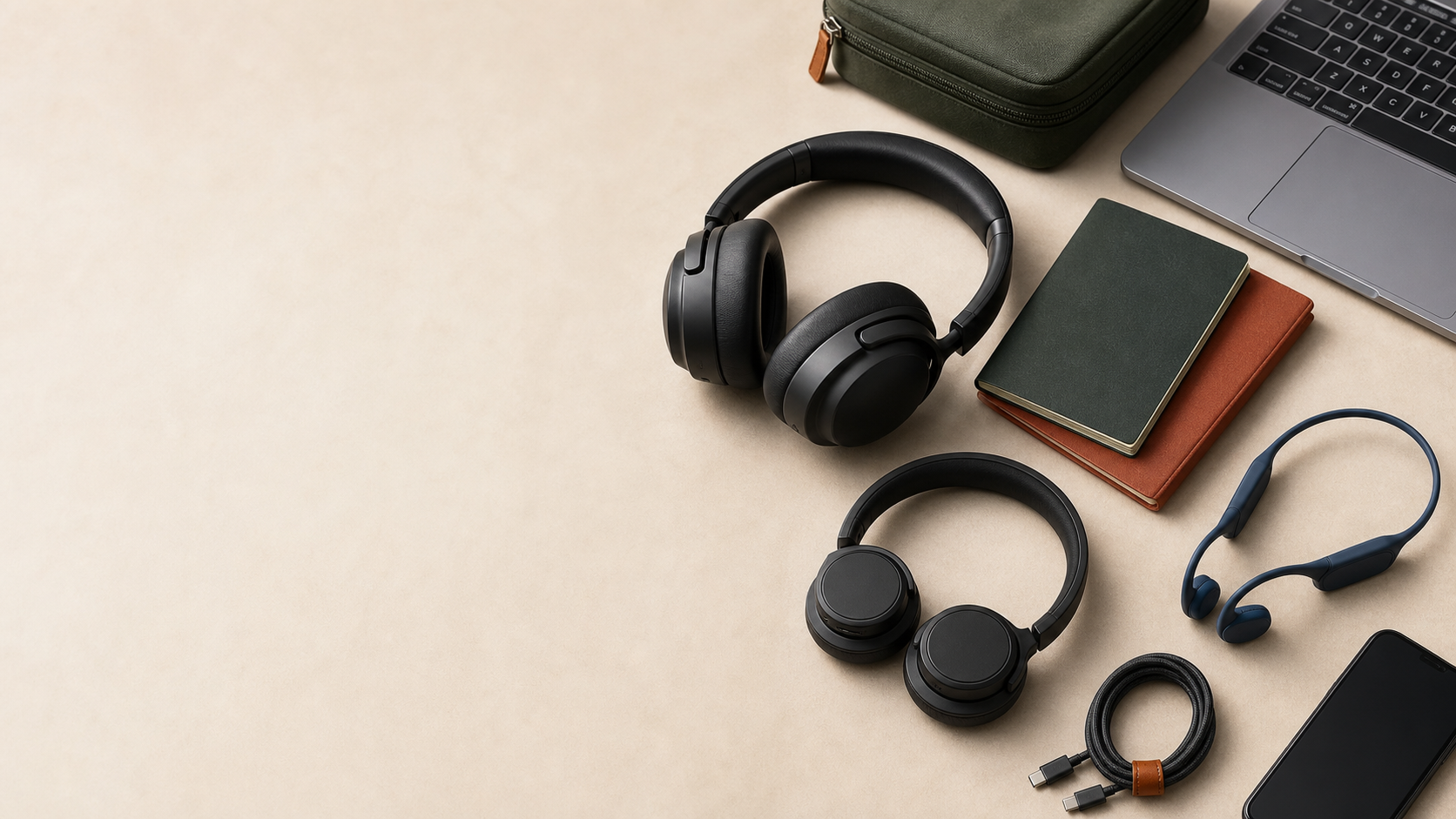
Open-ear and noise-canceling headphones are not two versions of the same gift. Open-ear models leave the ear canal uncovered so the listener can hear more of the surroundings. Noise-canceling over-ear models create a seal and electronically reduce steady environmental noise. One prioritizes awareness; the other prioritizes separation. For more exact under-$100 models, see our headphones gift guide.
Choose open-ear headphones for a runner, walker, active parent, or listener who dislikes blocked ears and deliberately wants environmental sound. Choose noise-canceling headphones for flights, trains, shared offices, study sessions, or a recipient who wants to reduce repetitive background noise.
We use the Shokz OpenRun and Soundcore Q20i as concrete, currently buyable examples. Their exact Amazon US ASINs showed active new-item purchase paths during the check on August 19, 2026. Stock, price, seller, and local delivery should be verified again before publication and purchase.
Quick Summary
- Shokz OpenRunBetter for workouts, awareness, and listeners who dislike sealed earcups.
- Soundcore Q20iBetter for flights, commuting, offices, and focused listening in steady noise.
The Better Gift by Situation
The core difference: awareness or isolation
An open-ear design does not block the ear canal, so conversations, traffic, and announcements remain more audible. That can feel natural for exercise and household awareness. It also means the music competes directly with the environment. On a loud train or airplane, increasing volume may still fail to create a satisfying listening experience.
Noise-canceling headphones use microphones and processing to reduce external sound, especially steady low-frequency noise. The earcups also provide passive isolation. That makes them more effective for travel and concentration, but it can reduce awareness, create ear-pad heat, and feel like pressure to some listeners.
| Decision point | Open-ear | Noise-canceling over-ear |
|---|---|---|
| Environmental awareness | High; ear canal remains open | Lower unless transparency mode is used |
| Steady travel noise | Limited reduction | Usually the stronger choice |
| Exercise heat | Less ear coverage | Pads can become warm |
| Bass and immersion | More limited in loud environments | Stronger seal and isolation |
| Sound leakage | Can be more noticeable nearby | Usually more contained at moderate volume |
| Glasses and fit | Band placement can conflict with frames | Pad seal and clamp can change with glasses |
| Battery | Often shorter in sport-focused models | Often much longer in full-size models |
| Packing | Light but shape may not fold | Bulkier; some models fold |
Comfort is more than weight
Open-ear models avoid ear-canal pressure and over-ear heat, but their band can interact with glasses, hats, helmets, hair, or head shape. Bone-conduction contact points can feel unfamiliar. Over-ear ANC headphones distribute weight through the headband and pads; comfort depends on clamp, cup depth, seal, temperature, and glasses.
This is why a gift receipt matters even when the specifications are correct. Ask the recipient to wear the headphones for a full normal session during the return window, not just for two minutes while unboxing.
Work, calls, and home awareness
For focused work in a shared office, ANC is usually more useful. For a parent or caregiver who wants audio while remaining aware of the room, open-ear can be the better fit. Neither design guarantees excellent calls: microphone performance changes with wind, room noise, and software. A person who spends hours in meetings may value microphone quality and multipoint switching more than music features.
Travel and exercise
Airplanes and trains favor ANC because the listener is surrounded by steady engine and cabin noise. Running, walking, and light exercise can favor open-ear because the ears remain uncovered and the design is less insulating. Weather resistance must be checked separately: sweat resistance does not mean a model is safe for swimming.
Two Current Examples
Best open-ear pick
Shokz OpenRun

A light bone-conduction headset that keeps the ear canal open for workouts and awareness, but trades away isolation, quiet-room privacy, and the bass weight of sealed headphones.
Best for: A runner, walker, or active listener who deliberately wants to hear the environment
What we like
- Open-ear design leaves the ear canal uncovered
- Lightweight 26 g format with IP67 sweat resistance
- Up to eight hours stated battery life
Keep in mind
- Traffic awareness is not a safety guarantee
- Loud surroundings can overpower the audio
- Not intended for swimming and fit can conflict with glasses or headwear
Best affordable ANC pick
Soundcore Q20i

An accessible over-ear ANC option with a generous battery and app customization, best for someone who values practical isolation more than premium materials or compact packing.
Best for: A student, office worker, or occasional traveler who wants affordable ANC and a simple app
What we like
- Hybrid ANC with transparency mode
- Up to 40 hours with ANC or 60 hours without it
- App EQ and two-device connection
Keep in mind
- Bulky for a small everyday bag
- Bass-forward tuning may need app adjustment
- Build and microphones are budget-oriented
A five-question gift test
- Where will they listen most? Flights and trains favor ANC; outdoor movement may favor open-ear.
- Do they need to hear people or announcements? Transparency mode helps, but it is not identical to leaving the ear open.
- Do they dislike pressure, heat, or earbuds? Ask which discomfort they are actually trying to avoid.
- What do they wear? Glasses, hats, helmets, and hairstyles can change either fit.
- Can they exchange it? Keep packaging and choose a seller with a clear return path.
Our recommendation
For a frequent traveler or someone explicitly asking for quiet, give noise-canceling over-ear headphones. For an active listener who explicitly wants awareness and dislikes sealed ears, give open-ear. When the use case is mixed, ask which problem is more annoying: hearing too much of the environment or feeling cut off from it. That answer is more useful than comparing driver sizes.
How We Compared the Categories
This is a research-based category comparison using two current product examples, not a claim of a new head-to-head acoustic lab test. We applied the same gift questions to awareness, isolation, comfort, battery, calls, travel, exercise, weather resistance, and return risk.
Frequently Asked Questions
Do open-ear headphones block noise?
Generally no. They leave the ear canal open, so environmental sound remains audible and can compete with the audio.
Are noise-canceling headphones better for airplanes?
Usually yes. ANC is especially useful against steady low-frequency cabin and engine noise, provided the fit is comfortable.
Are open-ear headphones safer for running?
They can preserve more environmental awareness, but they are not a safety device. Volume, attention, traffic, route, and local rules still matter.
Does transparency mode make ANC headphones open-ear?
No. Transparency uses microphones to pass external sound through a sealed or covered design. It can be useful, but it does not feel or behave exactly like an uncovered ear.
Which design is better with glasses?
It depends. Over-ear pads can lose seal around thick frames, while an open-ear band can conflict with temples, hats, or helmets. Fit testing is essential.
Which is better for calls?
The category alone does not decide call quality. Microphone placement, wind handling, software, and the room matter. Check the exact model.
Which has better battery life?
Full-size ANC models often have much longer batteries than sport-focused open-ear models, but published maximums vary with settings and use.
Can I use Shokz OpenRun for swimming?
No. Its IP67 rating covers sweat and temporary water exposure, but the product is not intended for swimming.
Sources and Updates
The exact Amazon US listings and current manufacturer specifications were reviewed on August 19, 2026. Both examples showed active new-item purchase paths at that check. Reverify price, seller, stock, fit-related return terms, and delivery before publication or purchase.
- August 19, 2026Replaced the ANC example with Soundcore Q20i after the previous listing no longer matched the comparison’s intended value tier.
About the author
Maya Carter
Maya covers everyday tech and thoughtful gift ideas for FaveSift. Before joining the editorial team, she helped independent retailers turn dense product details into useful, human buying guides. Her work focuses on the features that change an ordinary commute, workday, or weekend listen.